



Grounding and children: what has been studied?
From barefoot play to contact with the earth. See what researchers have measured in children and how to get started outdoors.

Children ground themselves. Barefoot across the garden, hands in the sand, stretched out on the grass: until they are about five it happens by itself. Then come the shoes, the paved playground and the hours indoors, and most of that contact disappears. Below is what has been measured about it and how to bring it back in practice.
What has been measured in children
In 2017, Passi and colleagues measured skin voltage in 26 premature infants and heart rate variability in 20. Skin voltage fell by about 95% during grounding. Vagal tone increased in the group whose heart rate variability was measured. Passi et al., Neonatology (2017).
All the studies, with year and number of participants, are in scientific evidence for grounding.
Outdoors you barely have to organise anything
The easiest step is not to stop them: let them go barefoot. In the garden, on the grass in the park, at the water's edge on the beach. Damp grass or wet sand conducts distinctly better than bone-dry ground, so early in the morning or after a shower of rain works best.
Mostly, watch where they are walking: glass and sharp branches are the real objection, not the theory. There is more on that in walking barefoot outdoors.
Indoors: the bed is the obvious place
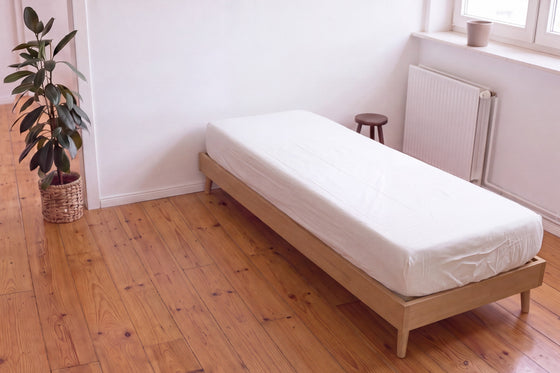
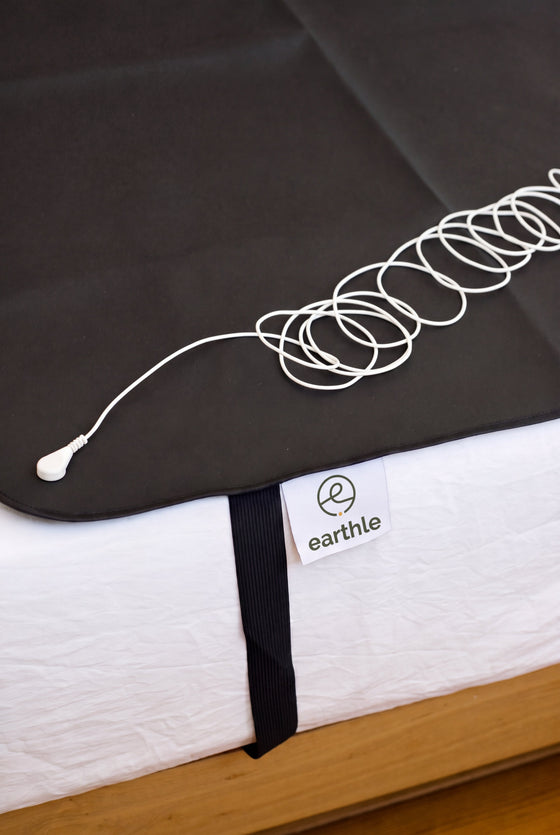
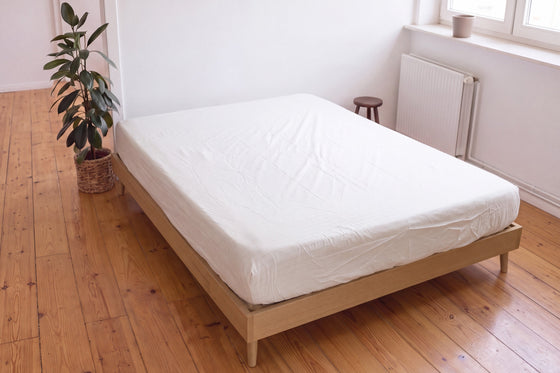
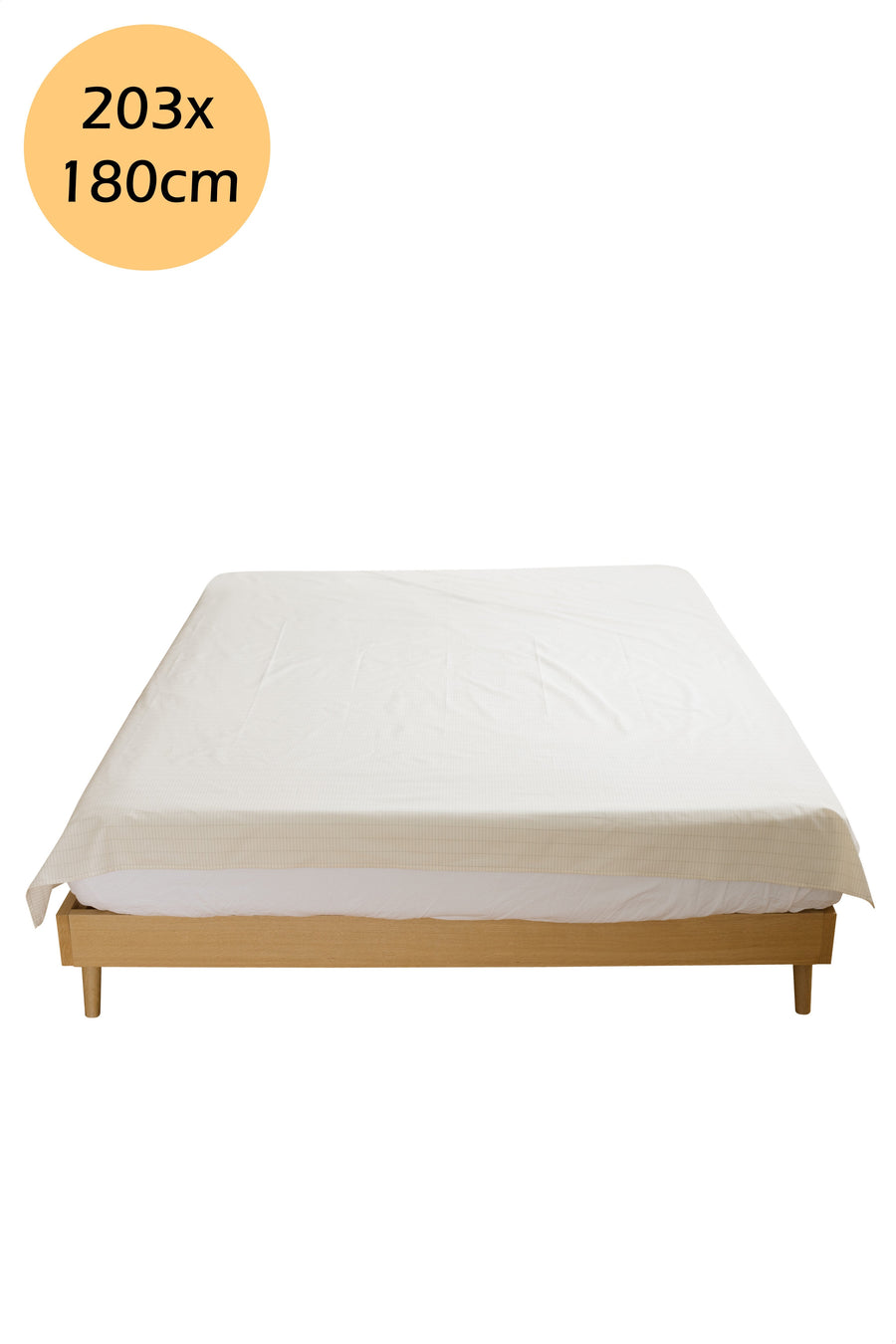
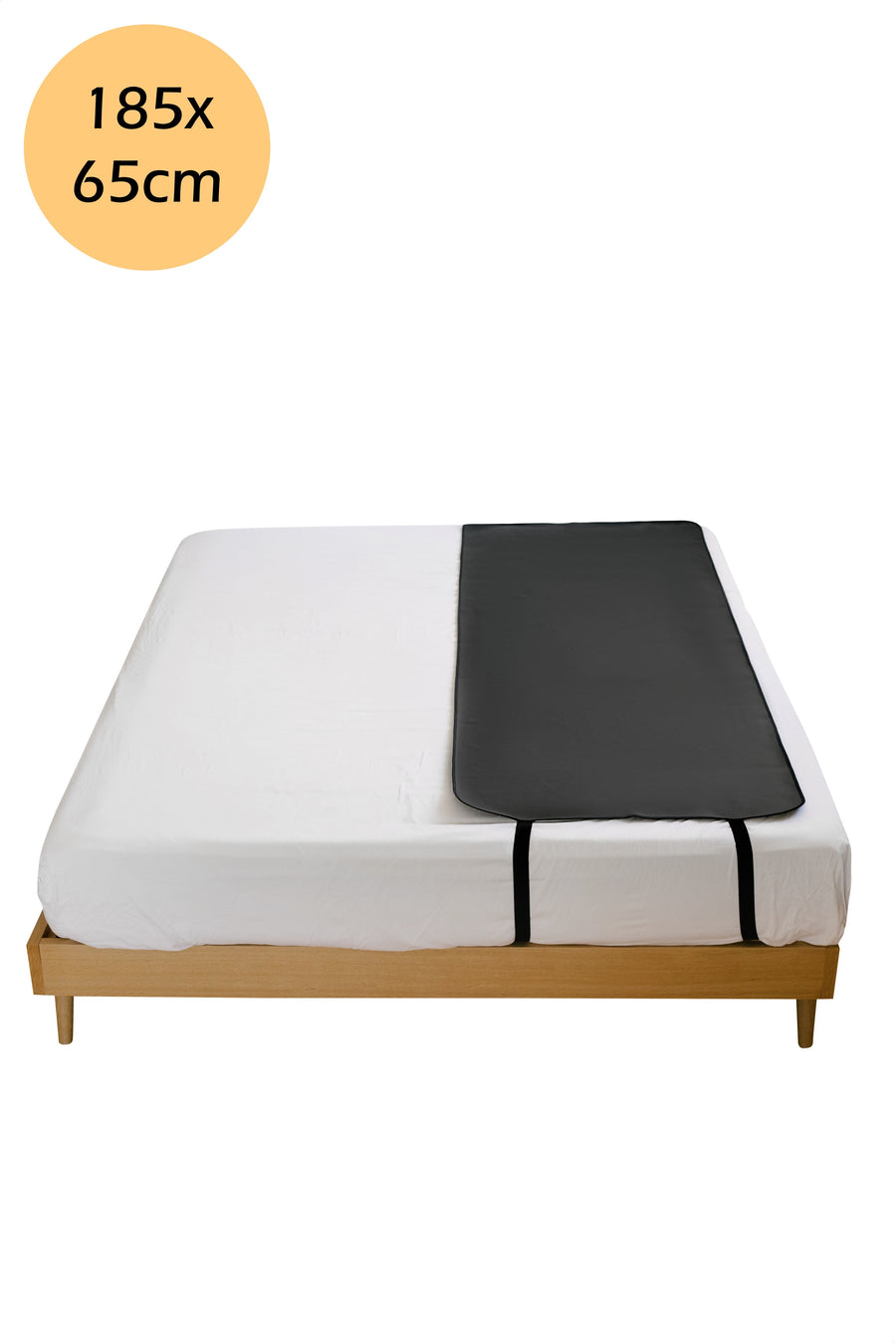
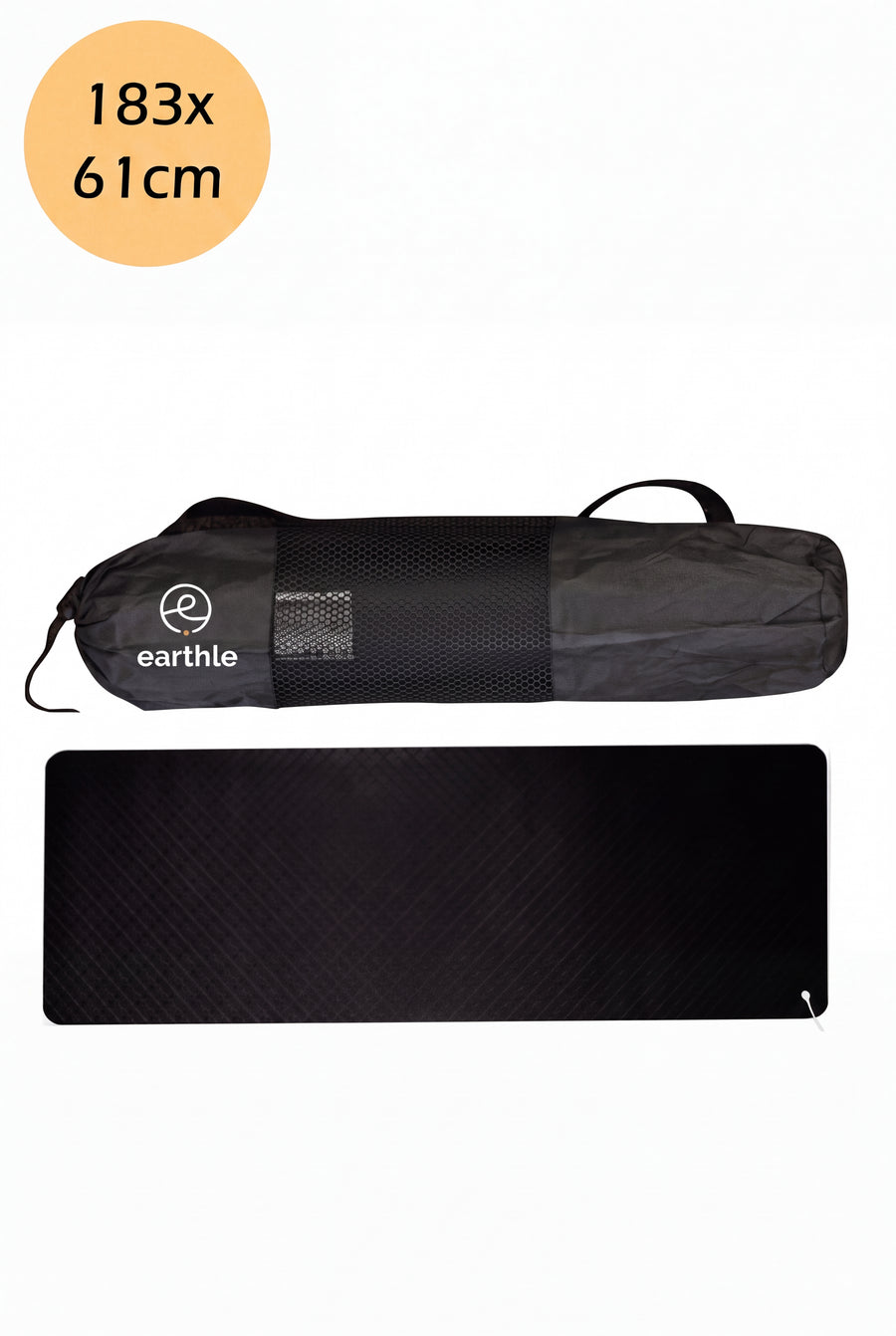
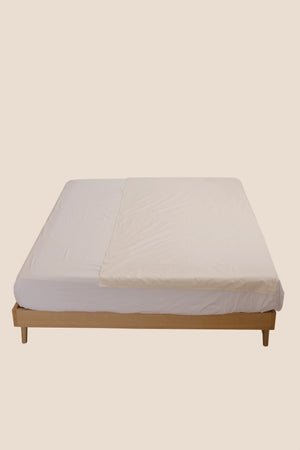
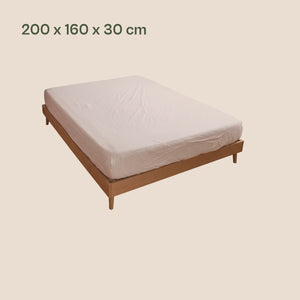
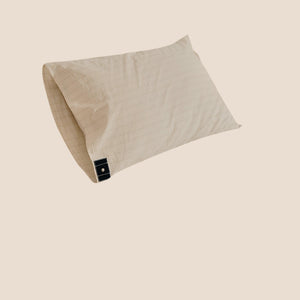
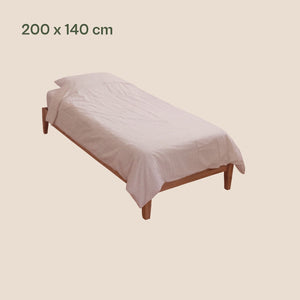
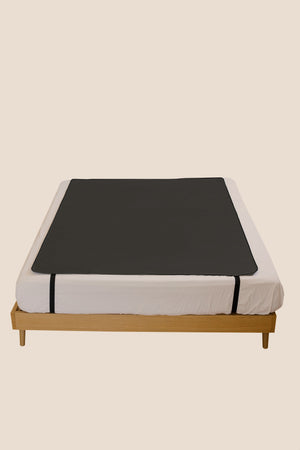
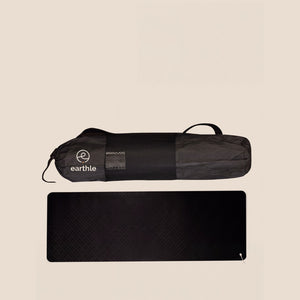
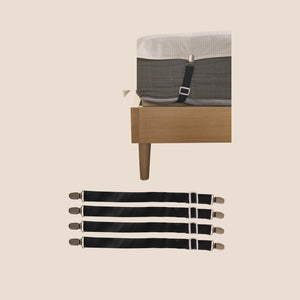
During the day, sustained contact is even less likely with children; they do not sit still for two minutes. In bed it is different, and they spend longer there than adults do. A sheet under the fitted sheet, or a sleeping mat if you only want to do part of the bed, is therefore the practical route. The pillowcase is the smallest step: you change nothing about the bed and your child notices nothing.
For older children who spend a lot of time at a screen for homework or gaming, the desk mat does the same under their forearms.
Practical and safe
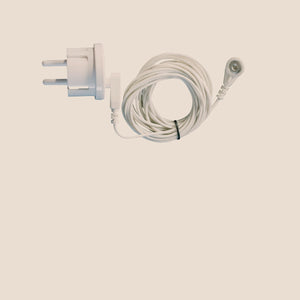
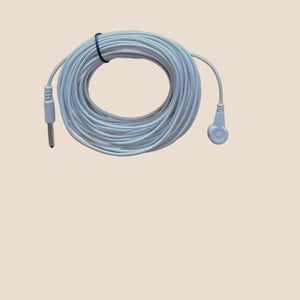
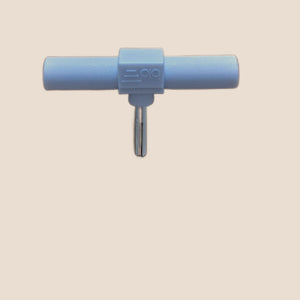
The plug connects to the earth contact of a grounded socket. The Earthle plug contains a 100 kΩ resistor. Check your cable with the plug completely disconnected from the socket.
What does need attention with a child's bed is the cable itself, as with any cable in a bedroom. Run it tight along the bed frame or behind the bed, so no loop lies loose in the bed. With very young children and in cots, I would simply not do it.
For the contact, the same applies as for adults: directly on the skin conducts best, but pyjamas or an ordinary fitted sheet over the earthing product still conducts perfectly well. With children that is often the practical choice anyway, because they perspire and spill, and that ordinary sheet is easier to wash, and washed more often, than the earthing product itself. Only through a thick duvet does little happen. And leave out the fabric softener, because it works against conductivity.
What not to expect from it
If you are pregnant, take medication or have a medical implant, discuss grounding with the clinician who knows your circumstances.
What it is: restoring contact that children used to have automatically. What parents report back about it is almost always about settling and sleeping through more calmly; those are experiences, not research findings, and they vary from child to child.
Where to start
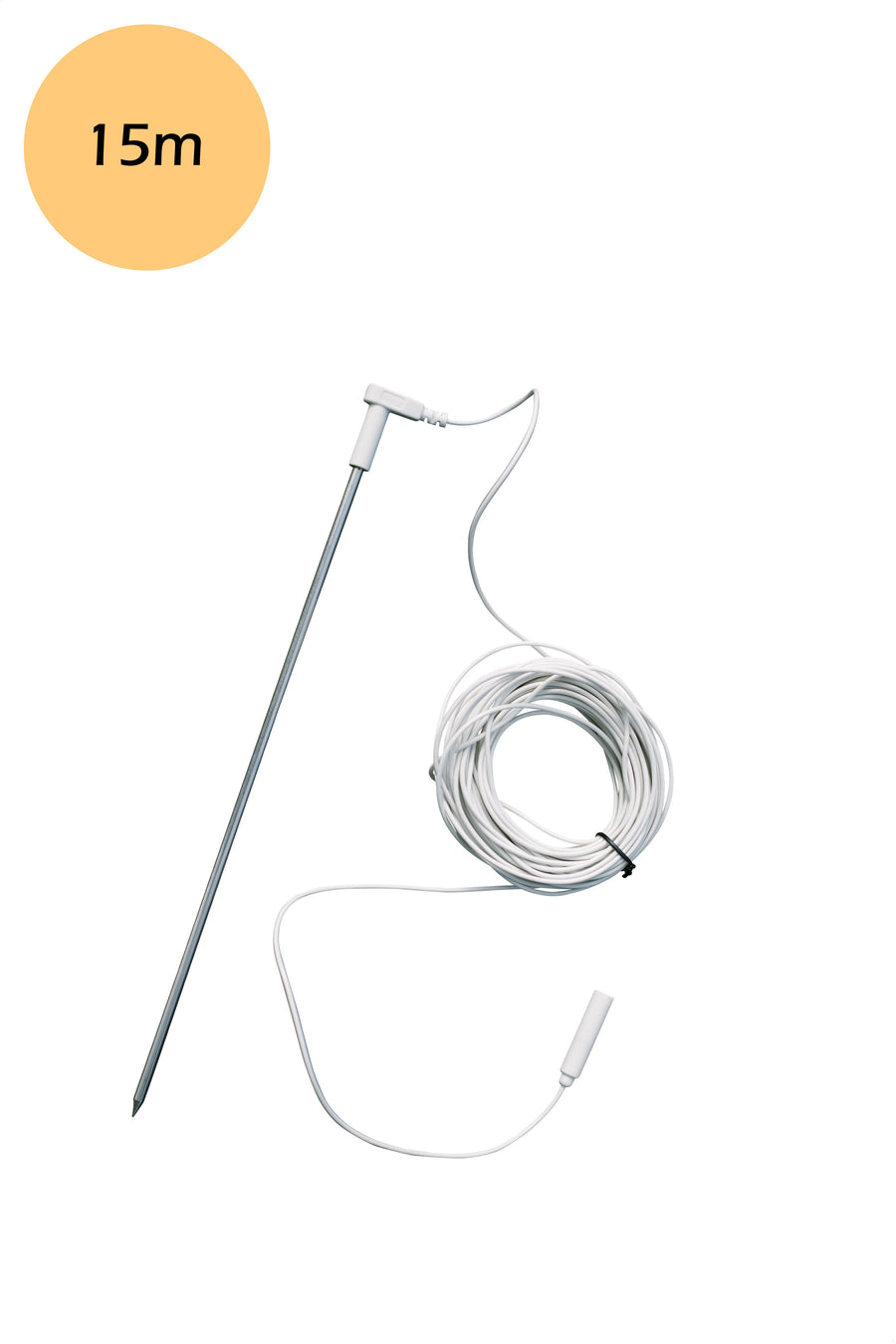
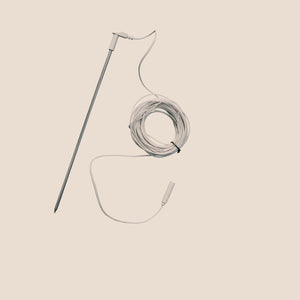
Which size fits your child's bed, and what you need if the room has no earthed socket, is what the guide at the bottom of the shop page asks you in a few short steps. If there is no earth pin, it still works through an earthing rod in the garden; that is covered in grounding without an earthed socket.
Sources
All links checked on September 9, 2026.